Cru is a 501(c)(3) non-profit organization. Contributions to Cru are tax-deductible as allowed by law.
Cru has complete discretion and control over the use of donated funds.

They say a picture is worth a thousand words. But in many of the places we serve, taking photos isn’t possible.
Military installations have strict guidelines that protect both service members and mission readiness—some of which limit our ability to capture images or video. That’s why we tell stories instead.
Our team members—many of whom have worn the uniform themselves—are the real “boots on the ground.” They meet face-to-face with service members in chapels, classrooms, and small groups. They hear the weight of their stories. They walk with them through life’s hardest moments. And they share the hope of Jesus with men and women who need Him most.Before military members deploy, they deserve the opportunity to know Christ. That calling has shaped our ministry since 1965.
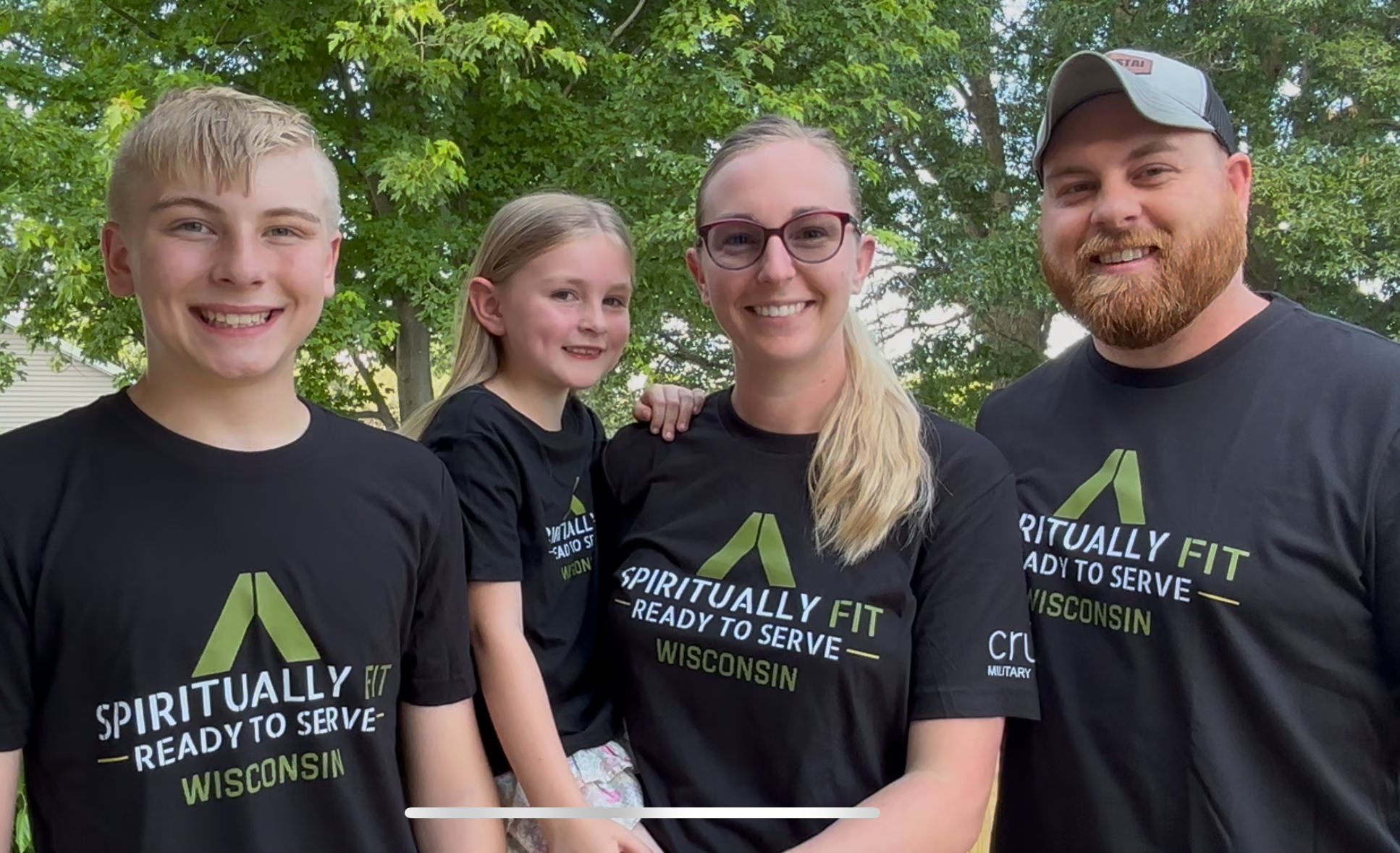
Each week, young men and women encounter Jesus through Bible studies using the Spiritually Fit—Ready to Serve booklet. As they grow in their faith, they discover a peace that sustains them through demanding assignments— and a strength many have never known before.
Others meet Christ through marriage classes and retreats where couples experience healing and renewed connection. Still others find Him through trauma recovery courses where they walk toward restoration alongside people who truly understand their journey. This is what ministry looks like when it’s lived out in real time, with real people.
But for this mission to continue, we need more “boots on the ground.” We need staff members and volunteers who feel the call to come alongside the military community and share God’s truth and love.
In the pages that follow, you’ll see what that looks like. These are real people. Real stories. Real lives impacted by the Gospel. I pray their stories encourage you—because through your prayers, generosity, and service, you are part of this mission too.
Please join us in praying that God would raise up more workers for this field. And if you know someone who may be called to serve the military community, we invite you to share our mission with them. Together, we can place more boots on the ground for Christ. Thank you for standing with us.
Semper Paratus—Always Ready.
This iconic motto of the Coast Guard is also a way of life for followers of Jesus—always ready for the return of Christ, ready to give an answer for our faith, ready to preach the Word in season and out of season, and ready to go where Jesus sends us—to be boots on the ground (or sea) for the Gospel of Jesus.
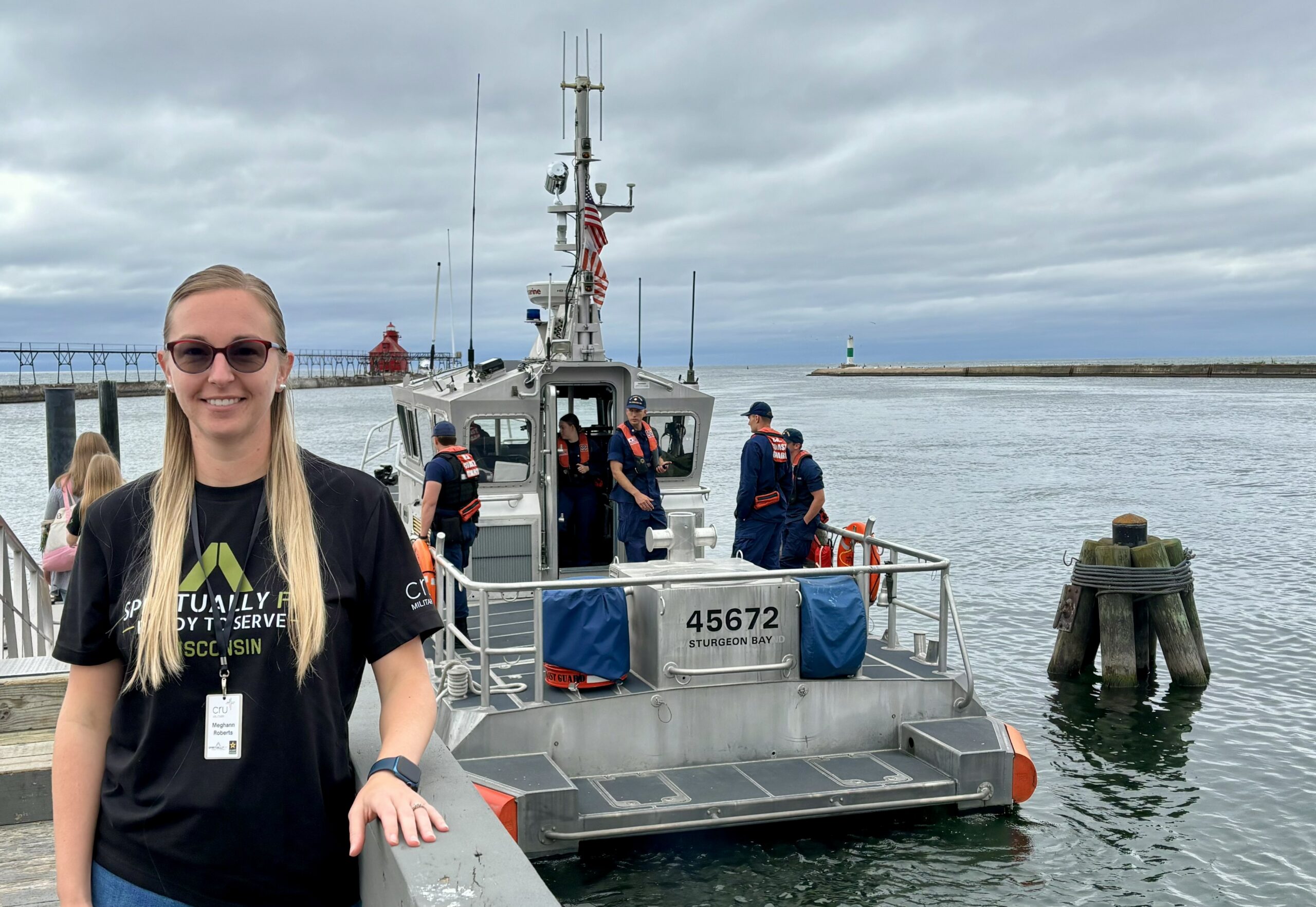
Travis Roberts was ministering to the military community at Fort Sill, Oklahoma, when he sensed a call to a new mission field for Cru Military®—to the Coast Guard.
“The Coast Guard is often considered the forgotten branch of the military,” Travis said. Because of that, he could not get the branch out of his thoughts and prayers. “There were lots of resources at Fort Sill. The ministry was booming and self-sustainable. I wasn’t needed there.”
God answered Travis’ prayers when a door opened for ministry along the Wisconsin coast, assisting a Coast Guard chaplain. “So we decided to launch an entirely new ministry to the Coast Guard,” Travis said. With leadership approval, he transitioned from Fort Sill and moved to Green Bay, Wisconsin.
“The main Coast Guard station for Wisconsin is in Milwaukee,” Travis explained. “Then they have auxiliaries—small pockets of Coast Guard personnel all along the state’s shoreline. That’s where rapid response teams are launched for emergencies and year-round operations on the Great Lakes.”
The chaplain assigned to the region was covering a vast area alone. “Coast Guard chaplains are often underfunded and undermanned,” Travis said. “The chaplain I work with is based in Milwaukee but is responsible for all the auxiliaries in that region. When he’s unable to be present, I’m able to support him by being available to the service members there.”
Travis relocated to Green Bay to serve the Sturgeon Bay station and auxiliaries farther north. On one visit to a station, Travis was invited to spend time with the crew and listen as they shared about some of the stresses they face. One Coast Guardsman told the story of responding to an overturned boat in which two children died. “Before I arrived, they didn’t have a chaplain or spiritual support present to talk through incidents like that—or to pray,” Travis shared.
Each season brings its own challenges. Summers are busy with tourism, often leading to physically draining seven-day workweeks. “Over the Fourth of July, there were numerous water accidents,” Travis said. “The Coast Guard plays a critical role during that time.” Winter brings a different strain. “Some of the Coast Guardsmen—also known as Guardians—come from large cities like New York or Chicago. Winters here are cold, dark, and quiet. The isolation can be difficult, and some struggle with discouragement or depression.”
As Travis began building relationships, he was invited to a voluntary meet-and-greet at one of the auxiliary stations. “I was given time to introduce myself and explain how I’m available to support them,” Travis said. About 43 Guardians attended. Those who wished were invited to complete an optional, anonymous survey on their phones.
The survey asked about spiritual interests and topics they would like to explore. “It takes less than 30 seconds,” Travis explained. “Many chose to participate.” Over half indicated they were seeking spiritually and wanted to meet individually. Since then, Travis has been meeting one-on-one with those who requested it to answer questions and talk through matters of faith. “One young man received Christ through one of those conversations,” Travis shared. What a meaningful way to begin a ministry.
At his primary station in Sturgeon Bay, Travis was given permission to host a time of fellowship with coffee and doughnuts for those who wished to attend. “When we arrived at the ship, space was made available for us to set up,” he said.
As service members stopped by to talk and enjoy refreshments, Travis was unexpectedly invited to briefly introduce himself to the larger group and explain his role as a ministry partner available to support them. He shared his testimony and how he felt called to serve Coast Guard members in the region. He also made himself available for voluntary one-on-one meetings, Bible studies, and fellowship opportunities.
On the table were Coast Guard-specific Bibles, Spiritually Fit—Ready to Serve booklets, and other ministry resources, all made available for those who were interested. The response was enthusiastic, and nearly all the materials were taken.
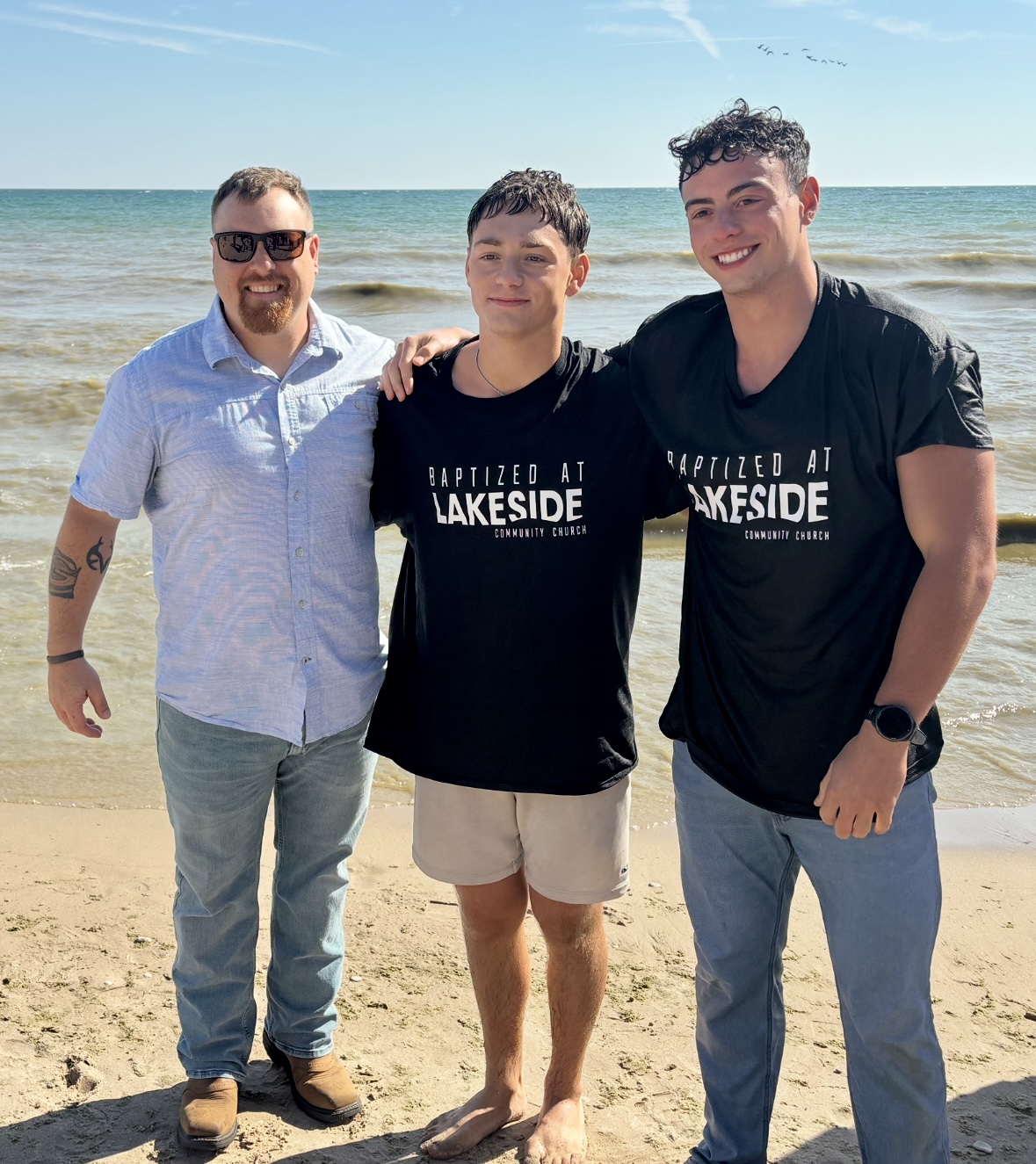
Travis is already meeting with young men and women (ages 25–35) across the region—offering fellowship, Bible studies, and relationship-building activities, including fun events like axe throwing. “Several of those men have since placed their faith in Christ and been baptized in Lake Michigan,” Travis said.
He continues to pray for additional team members and volunteers to help reach the Coast Guard community throughout the region.

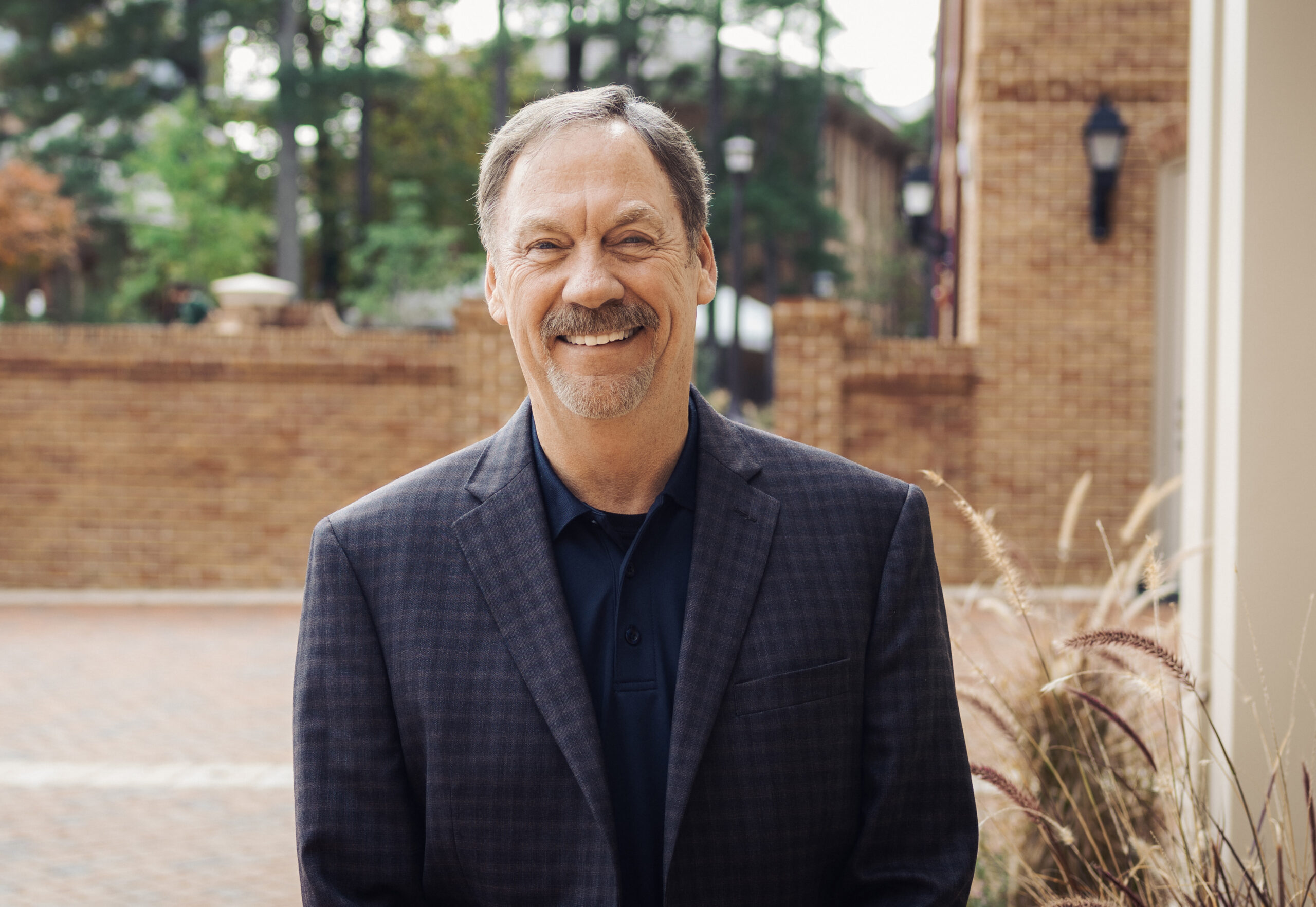
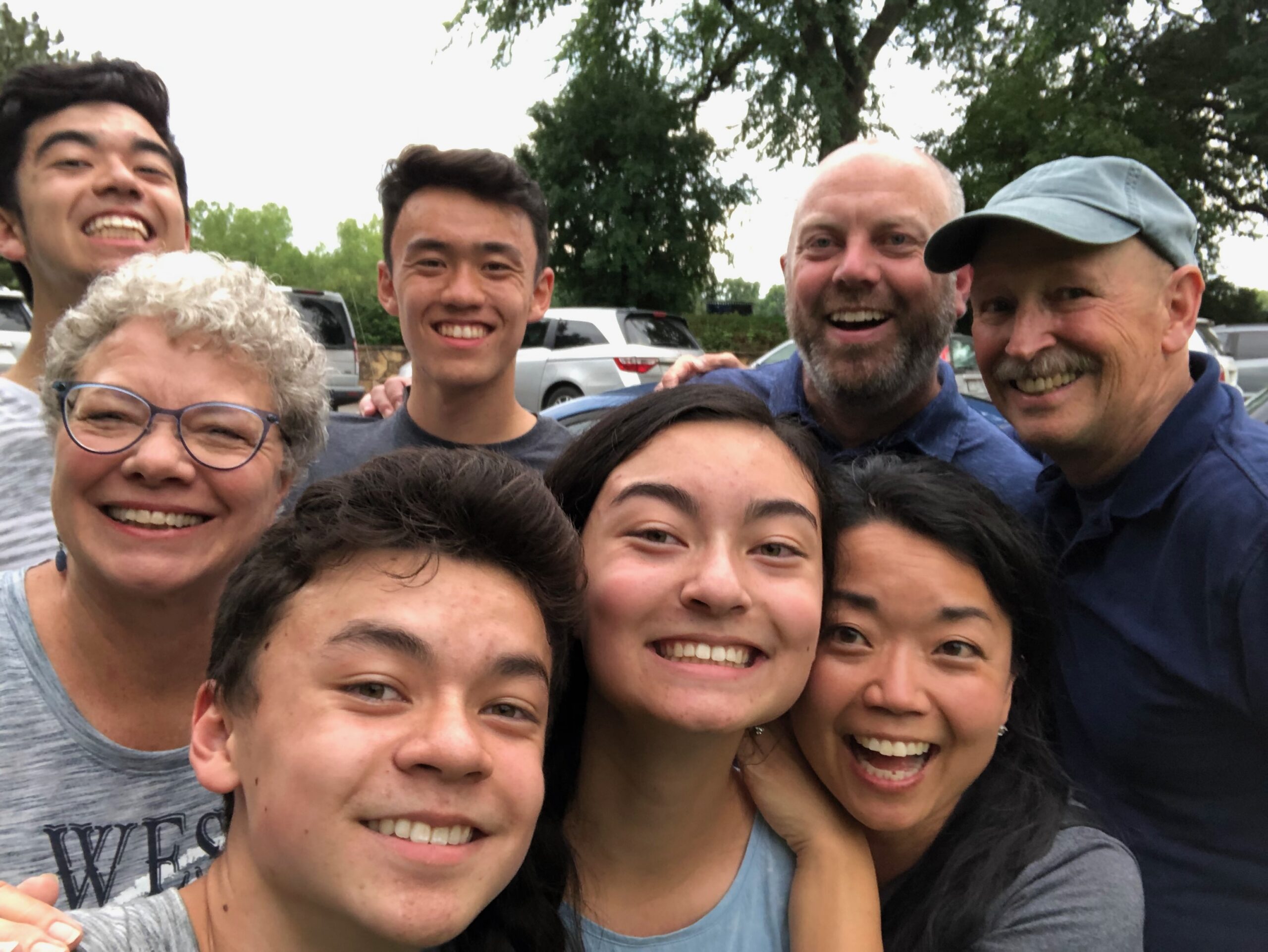
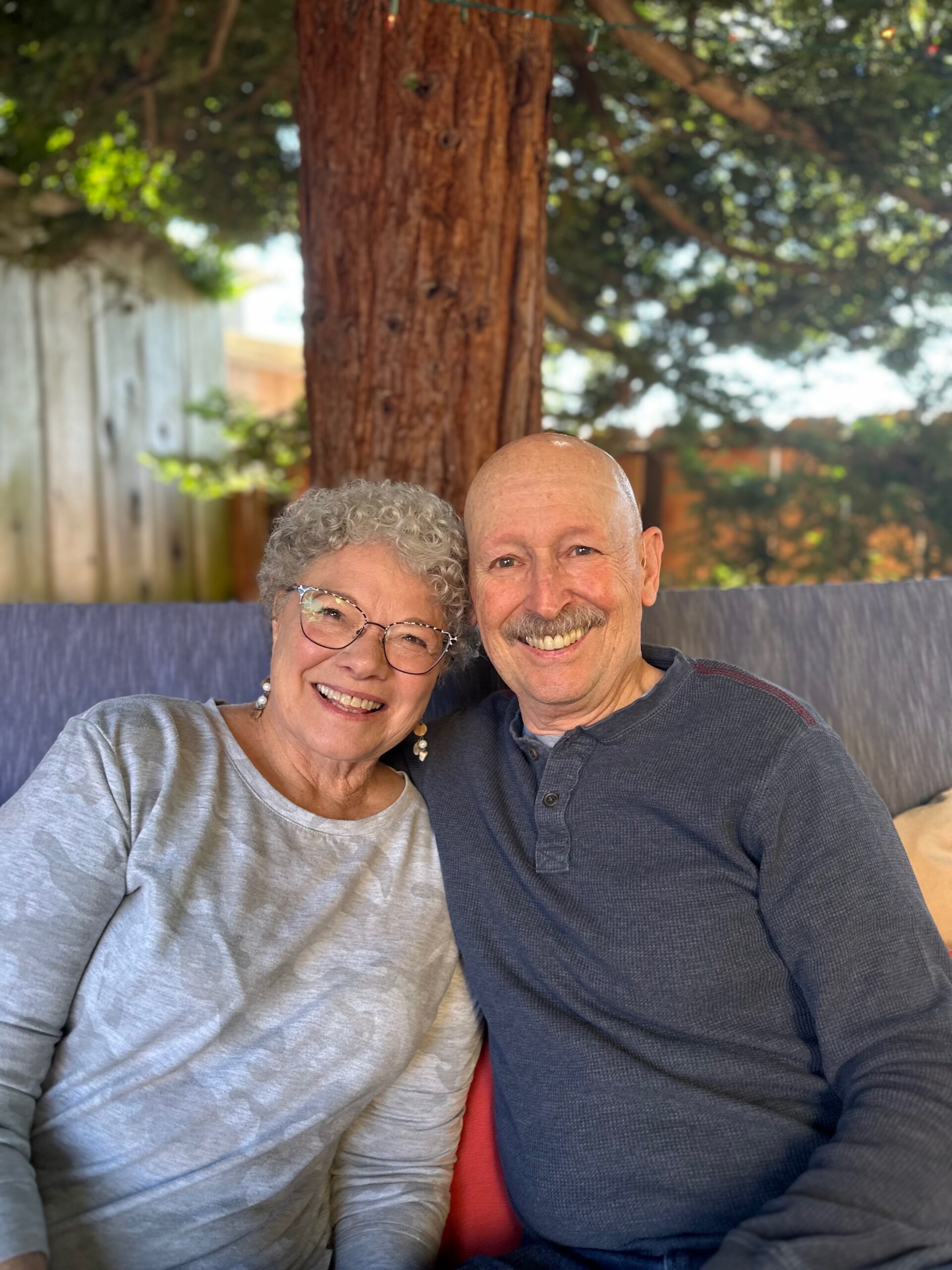
A young military couple was struggling with being newly married, new parents, and new to the military world, when they met an older couple who changed everything.
“Dave and Michael Cook are such a big part of our story,” said Becky Smith.
In the late 90’s, Becky and her husband Eric were at the Defense Language Institute (DLI) in California. “We were new to marriage and to the military and we didn’t have any family around,” Becky said. “And I was so lonely and just clueless about how to be a mom.”
Becky heard through the military grapevine that there was a lady in Monterey who loved to meet with military wives. Becky didn’t hesitate—she got her number and called. “I was so new to military life, so it had a huge impact being lonely and then finally meeting Michael. She just cared so well,” Becky said.
Becky met with Michael by herself first, then she and Eric met with Michael and her husband, Dave. “We talked through a lot of marriage things—the ‘rules of marriage,’” Becky said. “I now call it the ‘rules of Fight Club.’ They taught us how to fight in a healthy way—through good communication.”
“And don’t use absolutes when you’re fighting,” Eric added. “Stick to the issue and stuff like that. It was so pragmatic. And I would say it’s had the biggest impact on our marriage.”
“We had so much fun meeting with them,” Becky said. “You could just feel their love and their desire to see people walk with God.”
Over time, Becky and Eric were able to bring up an important issue that was bothering them both. “Military life did not fit Eric very well,” Becky said. “He really didn’t fit the typical mold of the military. So, we did a lot of discipleship around that part of our lives.”
We just hang out with people and often we say, ‘Let me share something our mentors taught us…’”
How did Eric and Becky know when they were ready to be mentors? “Oh, I still don’t,” Becky chuckled.
“The Cooks showed us, you don’t really say, ‘I’m going to start mentoring you,’” Eric said. “It starts with, ‘Hey, want to come over for dinner?’ Discipleship is a model of caring for the people that you’re living around. That kind of mindset is rare. The more I live, the more I see how precious it is to hold space for relationships and really walk with others through life.”
“I don’t understand why, but discipleship seems to be a big mystery in the church, and people don’t know how to do it,” Eric said. “To me, discipleship is intuitive and obvious. And in hindsight, I realize it’s intuitive and obvious because I know the Cooks.”
When Eric was eventually released from the military, the young couple needed to find a new path. “The Cooks helped us think through what God wanted from us and what we really wanted to do—and we eventually decided that we wanted to go into full-time ministry.”
They served as teaching parents in a residential teen home for a while, and then on to seminary. Their life choices took them away from the Cooks, but that didn’t stop their discipleship journey together.
“We kept in touch with them, and they just kept walking through life with us even though we lived in a bunch of different places, having lots of different ministry jobs,” Becky said. “We didn’t meet with them weekly, but we kept talking about life.”
“They’ve been mentors to us the whole way through,” Eric said. “Now we are at that stage of life where we are the mentors to other people. When we are talking to people and walking alongside them, we don’t say we’re mentoring them.
At many military facilities, ministries were asked to cease meeting during the COVID pandemic. Some ministries resumed quickly, while others waited for years for permission to return. We are so thrilled that ministry has now resumed at Fort Eustis in Newport News, Virginia! And God is moving!
What started with just a couple of AIT (Advanced Individual Training) Soldiers on a Tuesday night has grown into a very special grassroots movement. The Tuesday night men’s group has grown to 35, and the women’s group has grown to 15.
Part of the spiritual training these men and women receive is how to teach others what God is teaching them as they step out and lead their own Bible studies. One Tuesday afternoon, I leaned back and asked Patrick, the leader of the AIT ministry, what one of the departing Soldiers was going to preach on that night at Bible Study. He deftly shrugged his shoulders and said, “I have no idea. We talked about it briefly and I don’t have any concerns about him. Let’s see what the Holy Spirit does.”
I shrugged my shoulders and thought, “Not how I’d do it, but the Holy Spirit has been amazing the last several weeks. Why should tonight be any different?”
The departing Soldier got up to the podium and gave powerful testimony about how Christ has radically changed his life. He challenged the 35 men in the room to love one another radically and to be Jesus to one another. He testified about the strong brotherhood he found in the Tuesday night Bible study, how they challenged his faith, and how they did not shy away from the tough questions of faith. He encouraged his brothers to be firm in the Word, to love one another, and to be mighty warriors on mission for Christ.
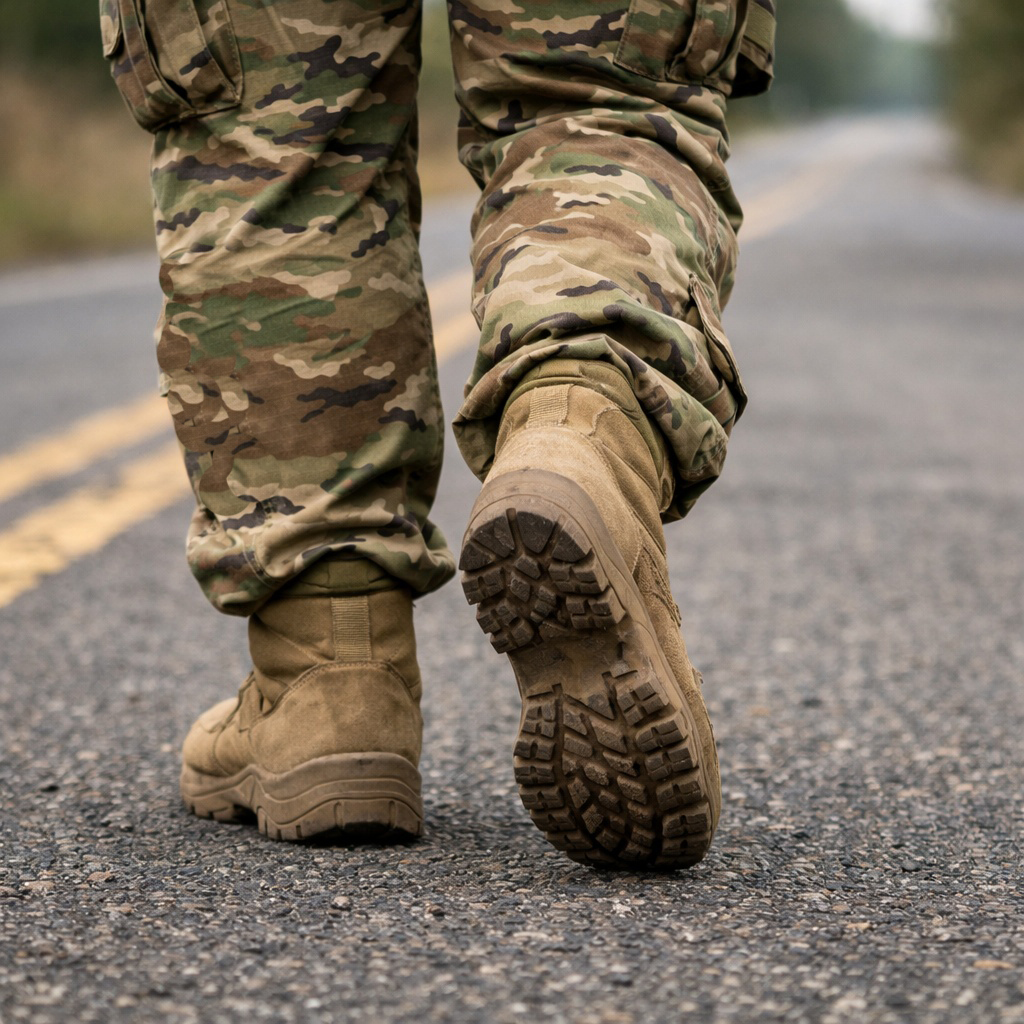
That young Soldier had been won to Christ, built in his faith, and now he is being sent to reach others for Christ wherever the military assigns him to serve. He is truly “sent.” He will be “boots on the ground” at his next duty station.
Making disciples is essentially a training activity. Think about how you train someone in anything—like golf.
If I was going to train someone how to play golf, the first thing I would do would be to show them what it looks like. I would show them how I grip the club correctly, how I swing—all the things I do to successfully play the game.
Then, eventually, I would put the club in their hands and talk them through their first attempts to copy me. There is an instructional component to discipleship, but there’s also a modeling component. “Here’s what I’m doing,” then “Now you try.” And then you send them off to go do the thing. You tell them, “I’ll see you next week, and we’ll talk about how your week went. You know, how did you play last week? How did it go?” You talk through it.
At the end of the day, if I’m teaching you how to play golf, I’m training you in golf. If I’m making a disciple, I’m training you in walking with the Lord.
The Spiritually Fit—Ready to Serve (SFRS) booklet has been a core teaching tool for Cru Military® since 2021. This 96-page booklet is specifically written and branded for the Army, Navy, Air Force, Marines, Space Force and Coast Guard—including the core values for each branch. It has also been translated into seven languages including French (Africa), Ukrainian, Amharic (Ethiopia), Mongolian, and Spanish.
Each chapter is short but powerful, covering topics like:
Who is God?
How to Know God
The Identity of a Faithful Warrior
Strategies for Victory
Spiritual Drills on the Word, Prayer, Witnessing, Fellowship, etc.
Resistance to Combat Trauma
And more
Most of the SFRS booklets are used at U.S. Gateways—military training installations where men and women go through the rigors of Basic Training to join the military. While Basic Training helps to make recruits physically and mentally tough, our teams help make them spiritually fit through a series of evangelistic and spiritual growth classes that clearly present the gospel to these young recruits. Each week, our teams serve alongside chaplains to build the recruits’ foundations in Christ. The booklets are also being used by chaplains in their own ministries and have been introduced in many VA hospitals and clinics.
In 2025, more than 83,000 SFRS booklets were distributed to U.S. service members in ministry outreaches and Bible studies under the oversight of chaplains. It is the first step to having more “boots on the ground” in sharing the Gospel of Jesus Christ to militaries around the world. Our desire is to see every military service member follow Jesus Christ, or know someone who is a follower of Jesus Christ.
Keith and Sharon Morgan are no strangers to military life and ministry. For 20 years they have been serving the military—Keith as the local Cru Military® director for the National Capital Region, together with his wife Sharon helping military couples navigate military life.
They have taught an eight-week marriage class at Ft. Belvoir called Family Night twice a year for the last few years. “Families enjoy a meal and afterwards, we break down into our separate classes. They vary from children’s classes through youth, teenage, up to adult,” shared Keith. “We’ve been leading the marriage class and we’ve really enjoyed doing that. In fact, marriage ministry was pretty much our on-ramp coming into Cru Military.”
Although there are many classes to choose from, the marriage class has been a popular one. “This last time we had our biggest group—25 couples. In fact, they had to cut off registration because we were running out of space,” Keith explained.
With a group that large, Keith and Sharon rely on “table hosts” to help lead discussions in smaller tables of three or four couples. They also have some assistance from local volunteers, Dean and Sonia Akers. “They help facilitate and that takes some of the pressure off us to lead every single week. We try to alternate when we can,” mentioned Keith.
They have people with a variety of ages and experiences attending. Couples with over 50 years of marriage and newlywed couples—couples who have been divorced or remarried. They also have couples who have little or no faith background and couples who are walking with the Lord.
“We love doing ministry—facilitating ministry discussions around marriage with military couples. We’ve been using a variety of different curriculums, especially FamilyLife® resources such as Art of Marriage® and Vertical Marriage®,” Keith said. “Most of the classes are video-based discussions, 15-20 minutes of video followed by 30-40 minutes of discussion around what they just watched.”
Many of the couples come back to the class every semester. One of Sharon’s highlights include a wife who came up to her to ask if she was allowed to come to the class as an agnostic. “I told her, ‘Of course, you’re welcome to come. We’d love to have you,’” Sharon said. “She’s become one of our biggest cheerleaders and promoters.” That wife also started going to a Bible study, put on by Protestant Women of the Chapel, and has expressed how much the marriage classes have helped her marriage.
Another highlight included witnessing the process of a married couple married over 50 years finally going to counseling. “The wife seemed like she wanted to be there, and the husband was dragging his feet, but they kept coming back,” Sharon said. Keith had a private conversation with the man, and they decided to go to counseling after being married all this time. “That’s a big deal,” Keith shared.
Many of the attendee couples come back to the class after the semester is done and attend a new eight-week semester. “I think for military couples, it’s important for them to realize that the playing field is pretty level in terms of challenges they experience in marriage, that they aren’t the only ones, that they can get through it, and grow, not just maintain status quo, deal with their issue, and not ignore them. I think people are hungry for community and meeting with us in a small group is a place where they can talk and build community.” Keith explained.
“A lot of times in the military there’s an attitude of ‘you should have zero defects,’ meaning there should be nothing wrong with you,” Keith said. “To have a place away from the official military environment where you can let your guard down a little, be honest with people, hear other people be honest, receive encouragement, and hear truth from scripture—it becomes a place of refreshment. That keeps people coming back to the classes over and over.”

Cru is a 501(c)(3) non-profit organization. Contributions to Cru are tax-deductible as allowed by law.
Cru has complete discretion and control over the use of donated funds.

Copyright © 2013-2026 Cru Military®. All rights reserved.
(See appendix for photo attribution.)
The appearance of U.S. Department of War (DoW) visual information does not imply or constitute DoD endorsement.